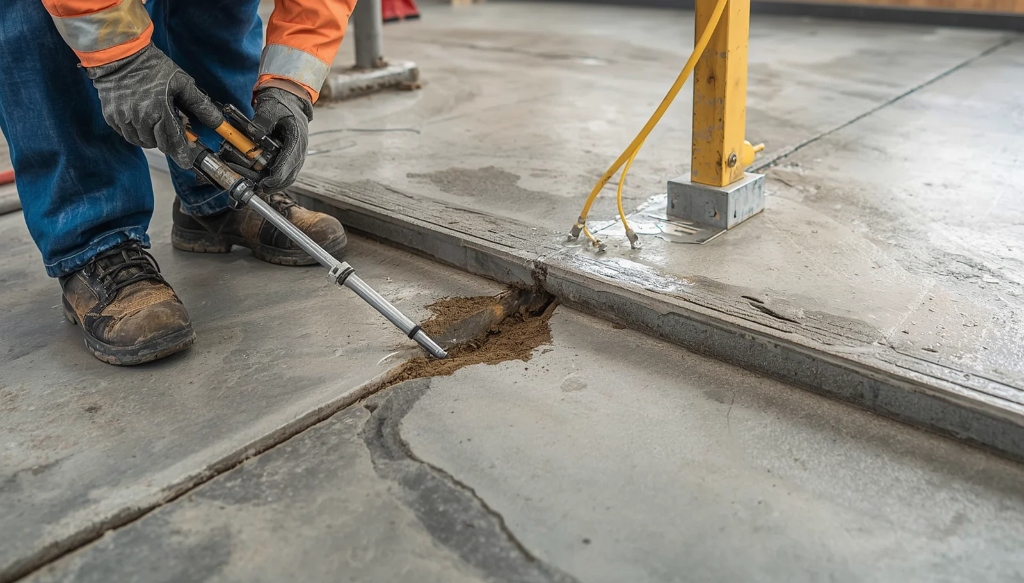
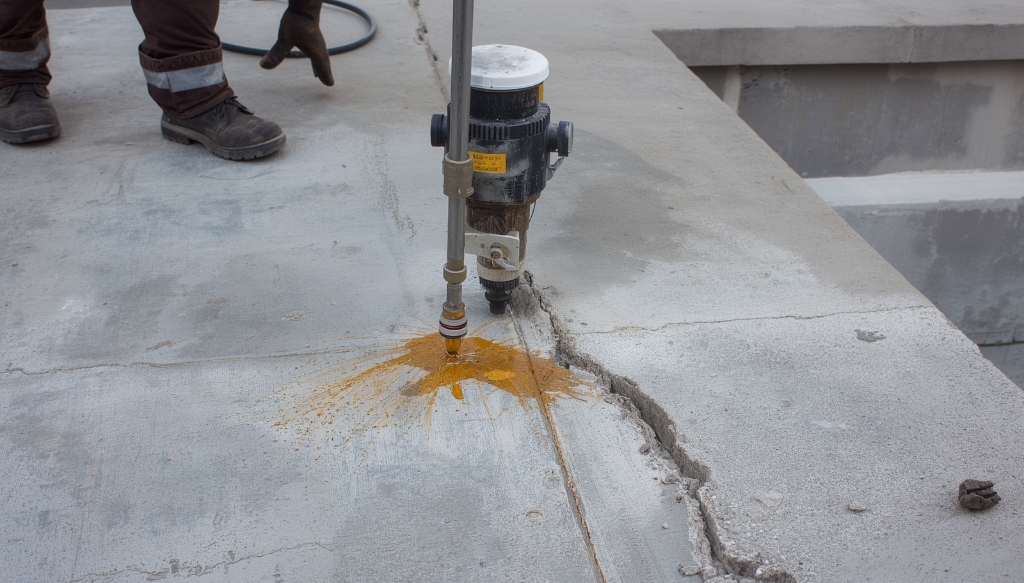
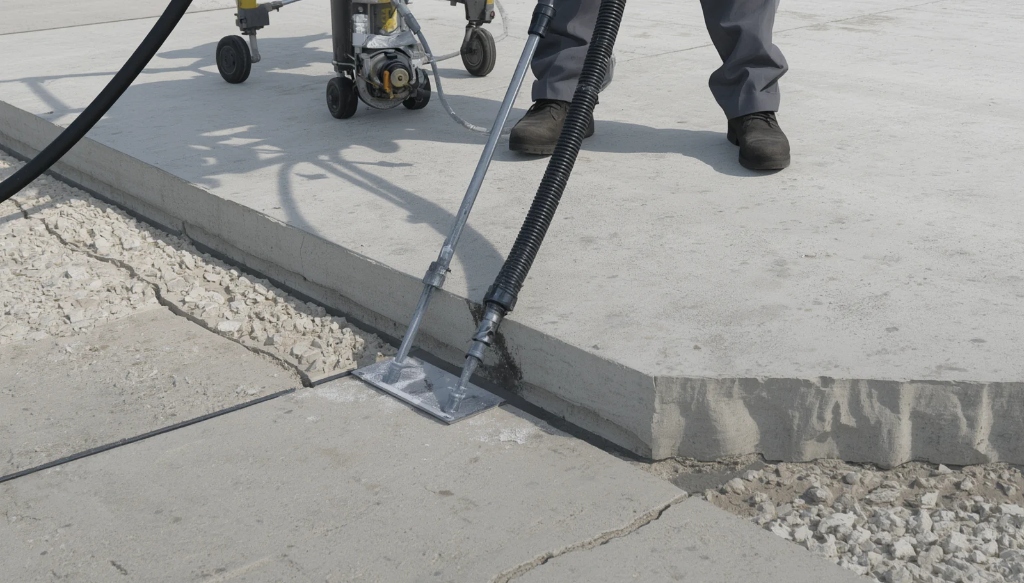
Immersive technical visualizer. Scroll down to trigger the high-pressure structural injection and watch the water seepage seal.
Hover or click on the glowing hotspots to explore the structural segments and diagnostic markers of a compromised slab.
Click or hover over any flashing coordinate node inside the concrete cross-section model to analyze its structural properties and repair implications.
Concrete is structurally porous. Click any structural threat node in our network schematic to view the engineering triggers of water ingress.
Select any structural threat node on the spider schematic network to inspect its engineering causes, consequences, and sealant strategies.
Our structured engineering methodology ensures structural defects are identified, treated, and validated permanently.
Comprehensive physical structural inspection and moisture mapping.
Identifying ingress channels and evaluating pressure forces.
Engineering assessment of loads and material selection.
Defining packer placements and chemical resin types.
High-pressure injection and chemical resin monitoring.
Ultrasonic check to verify core stabilization.
Click on any panel to expand its technical profile, cross-sectional schematic, and recommended structural applications.
Specially formulated hydrophobic polyurethane is pressurized into cracks. Upon contacting moisture, the resin reacts and expands up to 20-30 times its volume, creating a tough, flexible foam barrier that instantly halts active water leaks.
Active chemicals react with concrete moisture and concrete carbonation components to form insoluble crystalline structures inside capillary tracts and micro-cracks. This makes the concrete itself an active, self-healing waterproof barrier.
Compare the core specifications and recommended environments for each concrete rehabilitation method.
| Technology Method | Works with Active Leak | Restores Strength | Handles Movement | Service Life | Primary Application |
|---|---|---|---|---|---|
| Epoxy Resin Injection | ✕ (No) | ✔ (Exceeds concrete) | ✕ (Rigid joint) | Permanent (Bonded) | Load-bearing concrete beams, slabs, column cracks |
| Polyurethane (PU) Injection | ✔ (Reacts & stops flow) | Partial (Matrix fill) | ✔ (Highly flexible) | 10 - 15+ Years | Wet joints, basements, elevator shafts, manholes |
| Crystalline Waterproofing | No (requires dry surface) | ✕ (Surface barrier) | ✕ (Rigid coating) | Lifetime of concrete | Concrete storage basins, mass containment, brick walls |
Drag the slider to compare concrete slabs suffering from active seepage vs repaired, dry concrete post-injection. Notice how the metrics update in real-time as the slider moves.
We protect concrete infrastructure across critical commercial, industrial, utility, and institutional sectors.
Click any node on the interactive network map to view concrete protection parameters, structural scopes, and key deliverables for that industry.
We approach structural waterproofing challenges with diagnostic testing, evidence-based methods, and professional execution.
Strategies designed by structural engineers prioritizing safety and stability.
Comprehensive test methodologies to isolate the source of leak paths.
High-pressure injection requires no excavation, avoiding costly shutdown cycles.
Engineering responses to structural leak sealing, chemical packers, and injection methods.
Every project begins with a diagnostics map. Brief our structural engineers on the leakage challenges of your concrete asset.